
June 12, 2026
The Real Cost of Containment Failure: Why Cheap Setup Leads to Expensive Problems
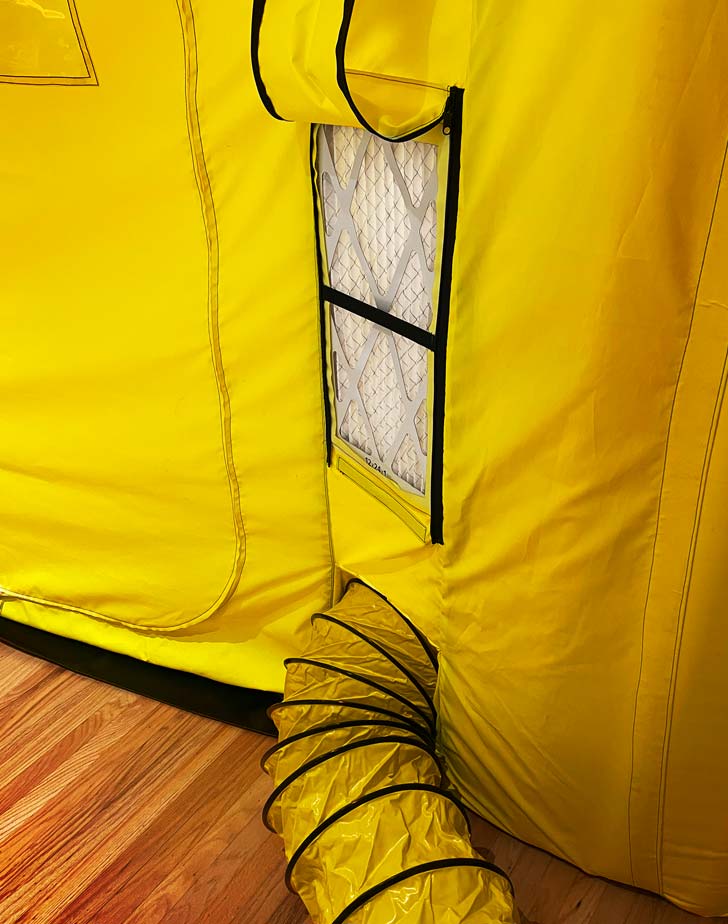
Containment failures seem minor in the moment. A torn piece of plastic, a strip of tape that won't hold, a gap you didn't notice. Your crew patches it, re-tapes it, and moves on.
But those small failures—especially during critical restoration work—have consequences that go far beyond the cost of the repair itself.
Understanding the true cost of containment failure helps explain why cheap, disposable containment ends up being the most expensive choice restoration contractors can make.
The Immediate Costs of Mid-Project Failures
When containment fails during active restoration work, the immediate disruptions are obvious:
Work Stops: Your crew can't continue safely until the breach is repaired and containment is restored. That's billable time lost.
Pressure Differential Collapses: In negative pressure containment, a breach means the protective barrier disappears instantly. Contaminated air that was being pulled into the work zone now escapes into clean areas.
Repairs Take Time: Your crew has to stop what they're doing, diagnose the problem, and fix it. That's more non-billable labor—and it could take 15 minutes or 2 hours depending on the failure.
Client Disruption: Visible containment failures in occupied buildings affect occupants and undermine client confidence. They see evidence that something isn't working right.
The Hidden Cost: Cross-Contamination Spread
The most expensive consequence of containment failure is one contractors often don't recognize until later: cross-contamination.
When a water damage restoration containment fails, moisture escapes and affects clean areas that shouldn't be wet. When a mold remediation containment fails, spores spread into uncontaminated spaces. When a demolition or asbestos abatement containment fails, dust and fibers migrate beyond the work zone.
Now you have a bigger problem:
Extended Remediation: The contamination that escaped the work zone now requires its own remediation. Secondary areas that should have been unaffected need treatment.
Liability and Complaints: If occupants or the property owner discover that contamination spread beyond the contained area because your containment failed, that's a potential complaint or claim against your company.
Insurance and Regulatory Issues: If contamination spread due to inadequate containment, documenting what happened becomes important for insurance purposes and regulatory compliance.
Client Distrust: Nothing damages the contractor-client relationship faster than discovering that your containment failure caused additional damage to their property.
What started as a small containment breach can become a project that costs significantly more than originally estimated—and damages your reputation in the process.
The Cost Comparison: Cheap vs. Professional Containment
This is where the economics of containment become clear.
Disposable plastic and tape containment has lower upfront costs but higher failure rates. You'll encounter tears, tape adhesion failures, and pressure loss—potentially on every job. Each failure creates the direct and hidden costs outlined above.
Professional reusable containment has higher upfront investment but significantly lower failure rates. AIRWALL barriers are engineered to hold pressure consistently and can outperform plastic containment by 200-400% when it comes to maintaining negative pressure.
When you calculate the cost of even one serious containment failure—the repair work, the re-remediation of affected areas, the client fallout—it often exceeds the entire upfront cost of a professional reusable containment system.
And that's just one failure. Most restoration companies encounter multiple containment failures per month with traditional plastic setups. The cumulative cost across a year is substantial.
Prevention Beats Crisis Management
The real lesson: preventing containment failure is far more cost-effective than managing the consequences of failure.
Professional reusable containment reduces failure risk by relying on air pressure, compression, and friction instead of fragile tape that loses adhesion. When your containment holds reliably throughout the project, you eliminate the disruptions, delays, and secondary contamination that failures cause.
For restoration companies running high volumes of work, investing in containment that doesn't fail is one of the smartest financial decisions they can make.
Making the Right Choice
Choosing between cheap disposable containment and professional reusable systems isn't just about the upfront cost. It's about understanding the true cost of failure—in direct expenses, lost time, client relationships, and liability.
The contractors who minimize containment failures are the ones who minimize overall project costs and maximize profitability.
Professional containment systems designed for restoration environments eliminate the failures that cheap setup creates. AIRWALL barriers are built to perform reliably on every job, protecting your jobsite, your timeline, and your reputation.
Explore professional containment solutions at https://www.zeppelinguys.com/store.
Cheap containment doesn't just fail—failures create expensive problems that ripple through your project and affect your bottom line. When you invest in professional containment that holds reliably, you're not just buying equipment. You're eliminating the hidden costs that cheap containment creates on every single job.


.png)