
June 26, 2026
Containment for Tight Spaces: How Flexible Barriers Adapt to Your Jobsite
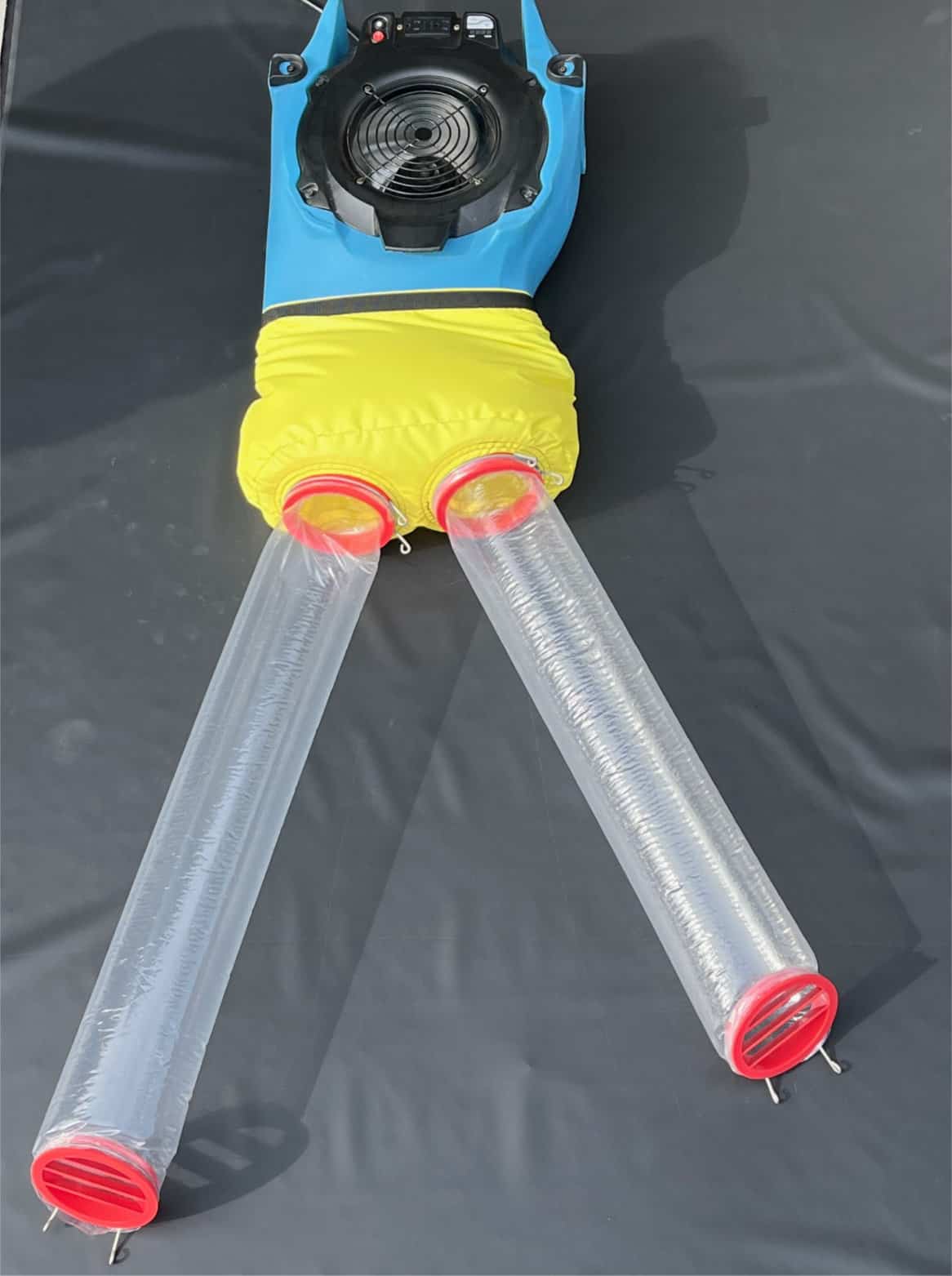
Not every jobsite fits a standard mold. Some restoration and construction projects involve unique layouts, double doorways, patio sliders, narrow hallways, or awkward architectural features that make traditional containment challenging.
When you can't easily seal off a work area, contamination control becomes harder. Dust spreads into adjacent spaces. Cross-contamination risks increase. And your crew ends up spending extra time trying to make containment work in spaces it wasn't designed for.
The solution isn't to accept compromised containment—it's to use barriers flexible enough to adapt to whatever layout you encounter.
The Limitation of One-Size-Fits-All Containment
Traditional plastic sheeting and tape containment assumes you can cut material to fit. That works for standard doorways, but what about:
- Double doors with a gap between them
- Patio sliders or French doors
- Narrow doorways requiring custom sizing
- Multi-opening work areas
- Rooms with unusual architectural features
- Spaces where multiple areas need containment
When containment systems can't flex to fit the space, contractors resort to workarounds: extra tape, plastic overlaps, or improvised solutions that often compromise integrity. These patches take time, use materials inefficiently, and frequently don't seal as well as purpose-built containment.
The result is containment that looks unprofessional and doesn't hold the barrier you intended.
Professional Containment That Adapts
Professional reusable containment systems solve this problem by building flexibility into the design.
AIRWALL barriers, for example, feature side zippers that allow you to connect multiple units together or adjust to narrower doorways. Instead of fighting with materials that don't fit the space, you simply configure your containment to match the actual layout.
This adaptive approach means:
Custom Configurations: Combine multiple containment units to seal double doors, patio sliders, or wide openings. The setup adapts to you—not the other way around.
Fast Adjustments: Need to resize containment for a narrower doorway? Zipper configurations allow quick adjustments without rebuilding entire barriers.
Better Sealing: When barriers fit the space properly, they seal more effectively. No gaps, no workarounds, just clean containment that does what it's supposed to do.
Professional Appearance: Custom-fitted containment looks intentional and well-planned, not improvised.
For restoration professionals working in older homes, commercial buildings, or spaces with non-standard layouts, this flexibility is invaluable. You're no longer limited by the physical space—your containment system works with the space you have.
Saving Time on Complex Setups
When jobsites have challenging layouts, traditional containment setup becomes time-consuming. Your crew has to measure, cut, patch, and adjust—often multiple times—to get containment that actually holds.
Flexible reusable containment eliminates most of that troubleshooting. Because the system is designed to adapt, setup is faster even in complex spaces. That means your team spends less time building barriers and more time on actual restoration or construction work.
For water damage restoration, mold remediation, or demolition projects in tight or unusual spaces, that time savings adds up—especially across multiple jobs.
The Professionalism Factor
Clients notice when containment looks like it was carefully planned versus hastily thrown together.
When your crew shows up with professional containment that precisely fits the space, properly seals all openings, and creates a clean barrier between work and clean areas, clients perceive that as competence. They see evidence that you've thought through the job and invested in proper equipment.
By contrast, containment that's clearly been patched, adjusted, and improvised sends the opposite message—even if it technically works.
Professional reusable containment systems like AIRWALL deliver both technical performance and visual confidence. They seal the space properly AND look like you know what you're doing.
Making Containment Work for Every Layout
The key to professional restoration and construction work is having containment systems flexible enough to handle any jobsite layout. Double doors, patio sliders, narrow doorways, or unusual spaces shouldn't force you to improvise or compromise on containment integrity.
AIRWALL's flexible design means you can deploy professional-grade containment on any project—no matter how challenging the layout.
Explore how adaptive containment systems can simplify your jobsite setups at https://www.zeppelinguys.com/store.
Containment that adapts to your jobsite—rather than forcing you to adapt to your containment—makes every project easier. When barriers fit the space properly, seal effectively, and install quickly, your team can focus on restoration or construction work instead of fighting with containment logistics.
Professional flexibility isn't a luxury—it's practical necessity for contractors working in real-world spaces with real-world layouts.


.png)